
Buying a new washer and dryer set seems simple, right up until you walk into a showroom and see dozens of models lined up side by side. Suddenly you’re comparing capacities, cycles, door styles, and price tags, and every option starts to look the same.
Here’s the good news: most of the things that make a laundry pair great have nothing to do with the brand name, the color, or one flashy feature. The decisions that matter come down to six questions. Answer them in order, and you’ll end up with a washer and dryer set that fits your space, keeps up with your household, saves money on utilities, and lasts for years.
This is the step almost everyone skips, and it’s the one that causes the most headaches on delivery day.
Before you think about features, measure the spot where your laundry pair will live. Note the width, depth, and height, and leave a little breathing room for hoses, vents, and door swing. Then measure the route the machines will travel: doorways, hallways, stair turns, and any tight corners along the way. A machine that fits the closet but can’t make it past the hallway isn’t the right machine.
A quick size guide:
Three inches may not sound like much, but in a laundry closet, a condo, or a second-floor nook, it can be the difference between a perfect fit and a return trip.
Once you know what fits, size the washer to the way you live. Capacity is measured in cubic feet, and getting it right is the single most important part of choosing a washer and dryer set. Too small, and you’ll be running extra loads all week. Too large, and you’re paying for space you never use.
Here’s a simple starting point based on the size of your household.
For singles and couples, a washer in the 3.5 to 4.5 cubic foot range handles everyday loads with ease, without taking up more room than you need.
Families do more laundry, more often. Stepping up to 4.5 to 5.5 cubic feet means fewer loads each week and plenty of room for school clothes, sports uniforms, and sheets.
If you regularly wash comforters, bedding, or a tall stack of towels, choose a washer with at least 5 cubic feet. When in doubt, lean toward the larger end. It’s easier to wash a small load in a big drum than to cram a big load into a small one.
Your layout shapes which machines make sense, so it’s worth deciding early.
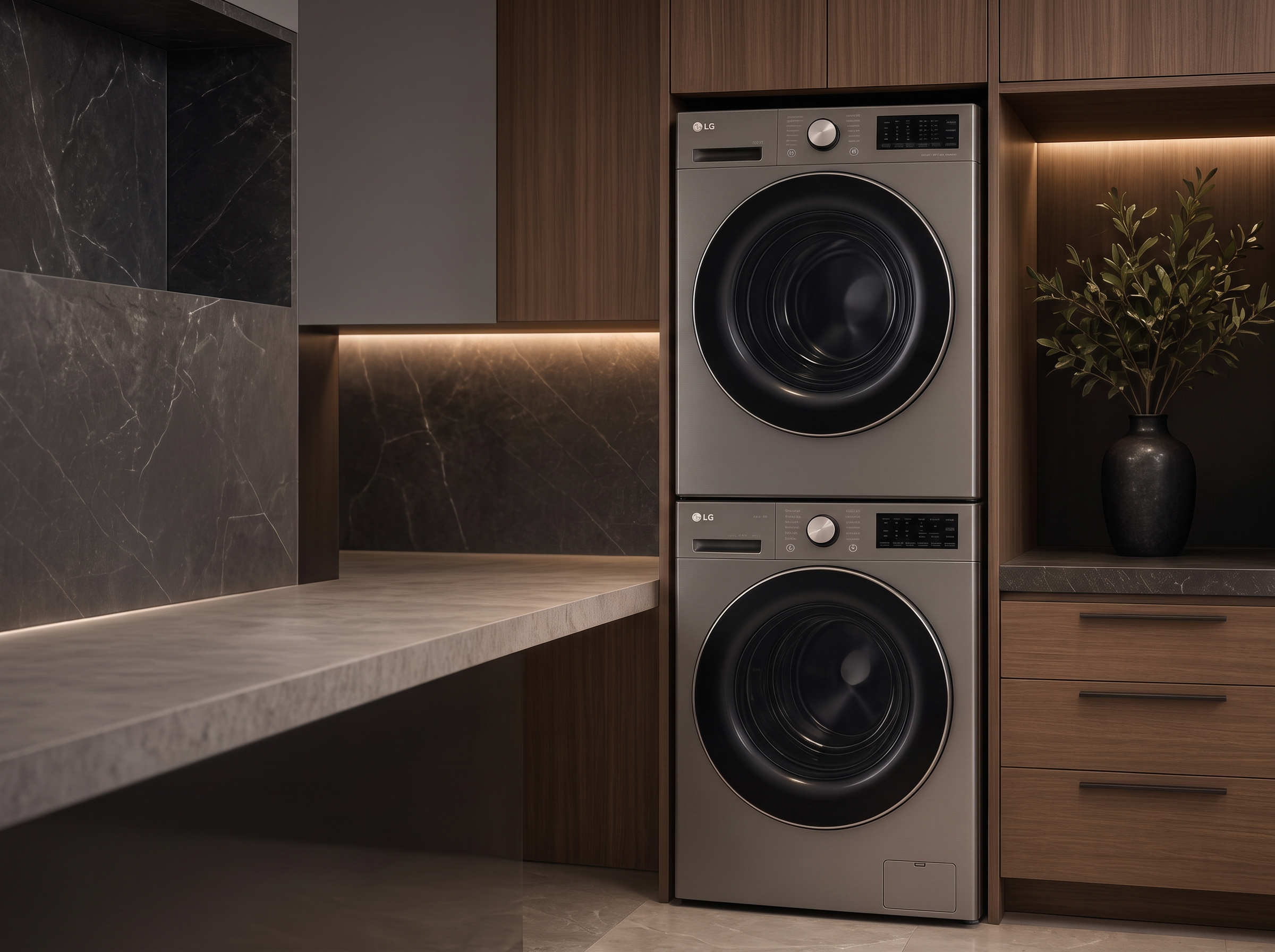
Stacked: Front-load washers and dryers are designed to stack cleanly with a stacking kit. That’s why you see this setup in apartments, laundry closets, and many modern homes where floor space is limited. You get the full capacity of both machines while using just one footprint. If you’re short on square footage, a stackable washer and dryer is often the smartest move.
Side-by-side: Top-load washers generally can’t be stacked, so the dryer sits next to the washer. Plan for roughly twice the floor width. You can add a shelf or cabinet above a top-loader, but you can’t safely place a dryer on top of it the way you can with a front-load pair.
This is one of the biggest choices you’ll make, and it affects cleaning, utility bills, and how your laundry room feels to use every day.
Why front-loaders win for most homes:
The trade-off is that you’ll bend down to load and unload. If that’s a concern, laundry pedestals raise the machines to a more comfortable height and add handy storage drawers underneath.
Why some people still prefer top-loaders: they’re easy to load without bending and are usually simpler to operate.
For most modern homes, a quality front-load washer and dryer set is the better long-term choice. You’ll feel the difference in your water bill, your drying times, and your floor space.
The price tag is only part of the story. A laundry pair runs for years, so what it costs to operate matters just as much as what it costs to buy.
Start with the ENERGY STAR label. Then, on the washer, check two numbers:
A high-efficiency front-loader can use roughly half the water of an older top-loader and leave clothes much drier. If your household does a lot of laundry, those savings add up quickly.
Consider a heat pump dryer. Also known as ventless dryers, heat pump models use significantly less electricity than a conventional electric dryer, and they don’t need an exterior vent. They take a bit longer to dry and cost more up front, but they’re an excellent choice for energy-conscious households or homes where venting is difficult or impossible.
Not every feature is worth paying for. The trick is to choose two or three you’ll use all the time, then stop there. These are the ones that tend to earn their keep:
The dryer deserves its own look, because it’s often the half of the pair people think about least.
Whatever you choose, match the dryer’s capacity to the washer. If the dryer can’t keep up, it becomes the bottleneck, and laundry day stretches on.
If you’re considering premium laundry, look past the control panel and pay attention to how the machine is built.
Advanced door seals, such as stainless steel designs in place of traditional rubber gaskets, dramatically reduce mold and bacteria buildup, one of the most common complaints about front-loaders. Solid construction, high spin speeds, and good vibration control make the real difference over time, keeping the machines quieter, steadier, and more reliable. Heat pump dryers are also gentler on clothes, so your favorite pieces last longer.
Some European brands even test their machines to simulate 10 to 20 years of real household use. That kind of engineering is what you’re paying for when you invest in a premium washer and dryer set.
A great machine is only as good as the people who can fix it. Before you buy:
The right washer and dryer set is the one that fits your space, handles your laundry volume, runs efficiently, and includes features you’ll use. Measure first, choose wisely, and buy once.
Curious about how a new washer and dryer set could fit into your home? At Atherton Appliance & Kitchens, we showcase premium laundry pairs from trusted brands, so you can see the finishes, open the doors, and compare sizes and features firsthand.
Stop by our showroom or schedule a consultation to explore your options, talk through your space and laundry routine with our team, and find the set that makes laundry day easier for years to come.
Watch our video: What to Look for When Buying a Washer & Dryer
Atherton Appliance & Kitchens: Where performance, design, and everyday life come together.