
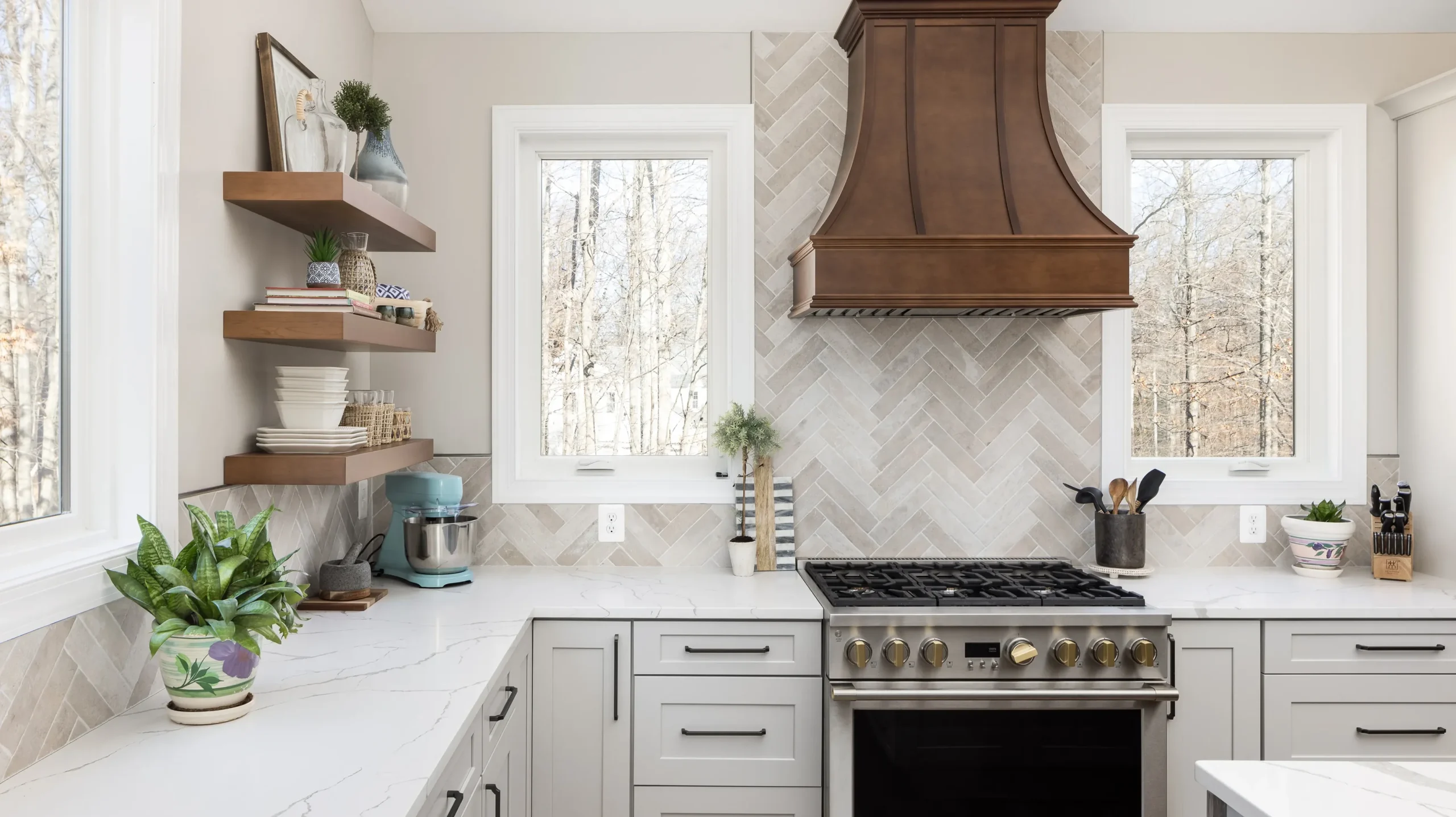
When most people think about a kitchen hood, they picture a shiny piece of stainless steel that matches the rest of the appliances and pulls smoke out of the air. That’s only part of the story. The truth is, a kitchen hood is a ventilation system, and when it’s not designed or installed properly, even the most expensive hood can fall short.
At Atherton Appliance & Kitchens, we see this all the time. Today, we’re breaking down what really matters when choosing a kitchen hood, including the details that often get overlooked during planning but make a big difference once you’re cooking every day.
CFM, or cubic feet per minute, is usually the first number people look at when shopping for a hood. While it’s important, higher CFM alone does not guarantee better performance.
You can have a very powerful hood that still struggles if the capture area is too small, the ductwork is poorly designed, or the installation wasn’t done correctly. Ventilation performance depends on the entire system working together, not just how strong the motor is.
For a hood to work effectively, it must fully cover the cooking surface. At a minimum, the hood should match the width of the cooktop or range. In many cases, going wider improves performance even more.
Depth matters just as much. The hood needs enough surface area to capture rising smoke, heat, and grease before they spread into the room. For example, a 54-inch wall hood can provide better capture over a 48-inch range simply because it offers more coverage.
Without proper coverage, even a high-powered hood can feel disappointing.
Once you start looking at hoods rated above 400 CFM, local building codes often require make-up air. This is one of the most overlooked parts of ventilation planning.
Make-up air is replacement air brought into the home to balance the air being exhausted by the hood. Without it, you can create negative pressure, which can affect comfort, indoor air quality, and even how other appliances operate.
The important takeaway is this: ventilation is not just about the hood. It’s about how the hood integrates with your home’s HVAC system. Planning for make-up air early can prevent unexpected costs and delays later in your project.
Another commonly overlooked factor is noise. A powerful hood that sounds like a jet engine can make conversation difficult and change how your kitchen feels during everyday use.
Kitchen hoods are often rated in sones rather than decibels. Sones measure how loud a sound feels to the human ear, which makes them more useful for homeowners. Lower sones mean quieter operation, while higher sones mean more noticeable noise.
When choosing a hood, it’s important to balance power with comfort. A hood that performs well and stays relatively quiet will get used more often, which leads to better air quality overall.
A hood is only as effective as its internal components. Grease builds up faster than most people expect, and dirty filters reduce airflow and performance.
Cleaning the filters about once a month can significantly improve how your hood works and help keep your kitchen safer. It’s also important to know what type of filter you have, since maintenance varies.
Common filter types include charcoal, mesh, and baffle filters. If you’re not sure which type your hood uses or how to clean it properly, this is a great question to ask before buying.
This is one of the most important decisions you’ll make when selecting a hood.
Ductless, or recirculating hoods, filter the air and release it back into the kitchen. Over-the-range microwaves are a common example. These setups can help reduce odors, but they do not remove heat, moisture, or combustion byproducts.
Ducted hoods vent air to the outside, which is the only truly effective way to improve indoor air quality, especially in kitchens with gas cooking. If ventilation performance is your goal, ducted is the way to go.
A big surprise for many homeowners is that kitchen hoods don’t have to follow a single design formula. Stainless steel is popular, but it’s far from your only option.
Today’s kitchens feature under-cabinet hoods, wall chimney styles, island hoods, ceiling extractors, downdrafts, and more. Many brands also offer custom hood solutions, allowing you to build around an insert or create a custom metal focal point that fits your design vision.
Brands like Vent-A-Hood make it possible to prioritize performance while giving designers and homeowners flexibility in how the hood looks and feels in the space.
Before we wrap up, here are a few practical tips that can dramatically improve how your hood performs:
Shorter duct runs are better. The shorter the path to the outside, the more efficient the ventilation.
Fewer turns mean less noise and better airflow. Every elbow in the ductwork reduces efficiency.
Turn the hood on before cooking. Establish airflow before smoke and odors appear.
Let the hood run after cooking. A few extra minutes clears lingering heat, moisture, and contaminants.
A kitchen hood isn’t just a finishing touch. It’s a system that relies on proper sizing, placement, ducting, and installation to work the way it should. When planned correctly, it improves comfort, protects cabinetry, and keeps your kitchen feeling fresh every day.
If you’re planning a new kitchen or upgrading your ventilation, we invite you to visit Atherton Appliance & Kitchens. Our showrooms feature a wide range of hood styles and ventilation solutions, so you can see, hear, and compare options in person.
Our team can help you select the right hood for your cooking style, layout, and local code requirements, and make sure everything works together seamlessly.
Stop by our showroom or schedule a consultation today.
Watch our video: What They Don’t Tell You About Kitchen Hoods
Atherton Appliance & Kitchens: Where performance, design, and everyday life come together