
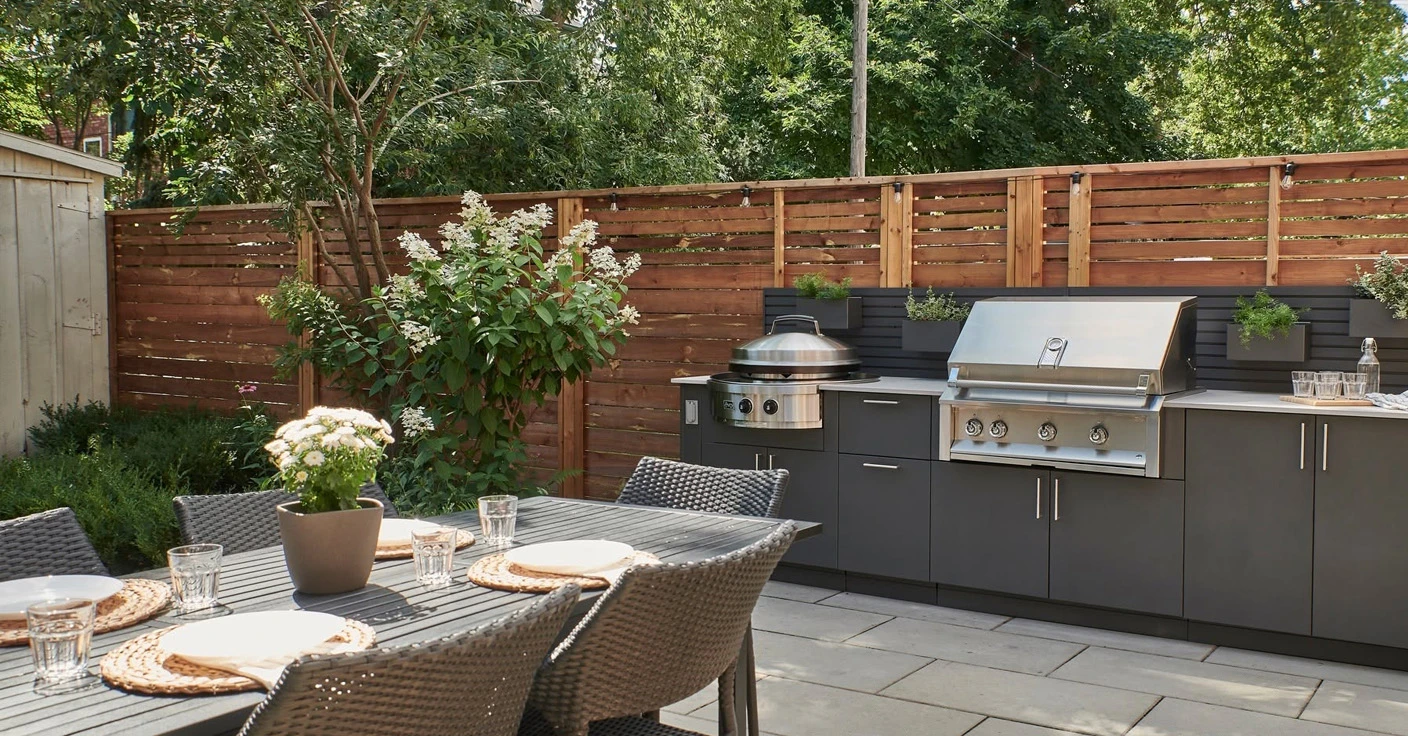
Most outdoor kitchens look great in photos. Fewer of them are actually enjoyable to cook in.
That gap between a kitchen that photographs beautifully and one that gets used every weekend comes down to one thing: whether the design was built around how people actually cook and entertain, or built around how it looks. The materials, the finishes, the appliances — those things matter, but they’re the last decision, not the first.
Here’s how to think about your outdoor kitchen the right way from the beginning.
Before you look at a single grill or consider a pizza oven, there are a few questions that will shape every decision that follows — and most people skip them entirely.
How often do you entertain, and for how many people? Are you primarily cooking for your immediate family on weekday evenings, or are you regularly hosting larger gatherings? The answer changes the scale of everything.
What’s the primary use of the space? Will this be a full outdoor cooking destination, or more of a grilling station that supplements your indoor kitchen? Do you need a sink and beverage center so you’re not constantly running back inside?
How many people will realistically be cooking at the same time? Two people cooking together need more counter space, better clearance, and multiple work zones. One dedicated cook needs a different kind of layout.
Will most of the prep happen indoors or outdoors? If you want to avoid running back and forth, your outdoor kitchen needs to be equipped for it. If you’re comfortable prepping inside and finishing outside, your requirements are simpler.
These questions don’t have universal answers — but your answers to them will completely change how your outdoor kitchen should be designed.
Once you know how you’ll use the space, the most effective design framework is to organize your outdoor kitchen into four distinct zones. When these zones are properly planned and placed, cooking outside becomes genuinely enjoyable rather than logistically frustrating.
The Hot Zone is where your grill, pizza oven, and any high-heat appliances live. This area needs enough clearance around it so you’re not cramped while working over fire — it’s the zone that demands the most physical space and the most respect.
The Wet Zone is your sink and prep area. This is where you wash produce, handle anything involving water, and do most of your active preparation. It should be easy to access without crossing through the hot zone — placement matters here.
The Cold Zone houses your refrigeration: outdoor refrigerators, beverage centers, ice makers. Keeping cold storage close by means ingredients and drinks are always within reach without a trip inside.
The Dry Zone is for storage and serving — plates, utensils, dry goods, and counter space to plate food before it goes to guests. This is often the most underplanned zone, and its absence is felt every single time you cook outside.
Zone planning determines what goes where. But the amount of actual working space you give yourself determines how pleasant the kitchen is to use day to day.
A layout with almost no counter space forces you to shuffle around constantly, set hot food directly on surfaces that weren’t designed for it, and effectively discourages anyone else from helping — turning cooking into a cramped solo experience.
A layout that gives you a real dedicated landing zone for food coming off the grill, space for a second person to assist without getting in the way, and counter depth that accommodates actual food preparation is a fundamentally different experience. The difference isn’t dramatic in photographs. It’s enormous in real use.
Small additions — extra counter depth, smart storage, a landing zone next to the grill — make an outdoor kitchen feel dramatically more functional than one that was designed primarily for visual impact.
Beyond zones and counter space, great outdoor kitchens are designed around the people who use them. A few considerations that shape this:
Who’s cooking, and how many of them? If two people regularly cook together, you need wider counters, multiple work zones, and enough clearance that they’re not constantly in each other’s way. Design for how you actually cook, not for how you imagine you might.
Island or no island? An island adds valuable prep space and can double as casual seating — but it consumes square footage and can interrupt the flow of people moving through the space. It’s worth thinking through before committing to it.
Where will guests sit and gather? There’s a meaningful difference between guests seated directly at the kitchen — which creates energy and interaction — and a lounge area a few steps away, which keeps the cooking space less crowded and more functional for whoever is at the grill. Neither is wrong; they just produce different experiences.
How does the outdoor space connect to indoors? The best outdoor kitchens feel like a natural extension of the home — not a separate project that happens to be outside. Whether someone is grabbing something from the indoor refrigerator, using the bathroom, or bringing food inside, the transition should feel seamless. Flow between the two spaces is worth designing for deliberately.
One of the most important decisions in outdoor kitchen design is whether you’re building a satellite kitchen or an independent one — and the right answer depends entirely on how you plan to use the space.
A satellite kitchen is a cooking extension of your indoor kitchen. Simpler, more affordable, and perfectly functional for most households, it relies on the indoor kitchen for a significant amount of prep, storage, and cleanup. You do most of your preparation inside, then bring everything outdoors to cook, grill, and serve. It’s a strong option if outdoor cooking is a regular but not primary part of how you entertain.
An independent kitchen is designed to stand on its own. More counter space, built-in refrigeration, a sink, proper storage, and the utilities to cook and entertain fully outside without running inside for anything. These kitchens cost more and take up more space, but they become a genuine destination in the backyard — the kind of outdoor space that people naturally gravitate toward and actually use year-round.
Neither is better in the abstract. The right choice is the one that matches how you actually live.
Outdoor cooking has evolved well beyond a standard gas grill, and the equipment available today reflects that. Pizza ovens from Gozney, professional grills from Lynx, Alfresco, and Fire Magic, smokers, kamados, and Argentinian gaucho-style grills from Kalamazoo — there’s no shortage of compelling options.
The principle that matters most here is simple: don’t add equipment because it looks impressive. Add it because it matches how you actually cook and what you genuinely enjoy making. An outdoor kitchen with three appliances you use constantly is far better than one with six appliances you use occasionally and one you’ve never touched.
The cabinetry defines what your outdoor kitchen looks, feels, and performs like over time — and there are several brands bringing genuinely high standards to this category.
Urban Bonfire is redefining what outdoor cabinetry can be with fully custom modular systems built from marine-grade aluminum. Their designs have more in common with high-end indoor kitchens than traditional outdoor setups — clean, modern, and built to last in demanding conditions.
Danver and Brown Jordan bring fully custom stainless steel cabinetry with refined finishes that feel closer to indoor quality than anything typically seen outdoors. They’re raising the baseline expectation for what an outdoor kitchen can look and feel like.
Kalamazoo sits at the top of the luxury outdoor kitchen category — highly custom, chef-driven designs that go far beyond a grill station and treat the outdoor kitchen as a genuine culinary environment.
Start with the right questions. Design for how people actually use the space. Organize around zones. Don’t design for what looks good on Instagram — design for what feels natural to cook and entertain in.
The best outdoor kitchens are the ones that get used constantly, year after year, because every decision in their design was made in service of the people cooking and gathering in them.
An outdoor kitchen is one of the most personal projects a homeowner can take on — and the details that make it work really well are worth getting right from the beginning.
At Atherton Appliance & Kitchens, we work with homeowners at every stage of outdoor kitchen planning. From equipment selection to zone layout to cabinetry, our team can help you think through the decisions that will determine how much you actually use and enjoy the space.
Visit our showroom or schedule a consultation to start planning an outdoor kitchen that works as well as it looks.
Watch our video: How to Design an Outdoor Kitchen That Actually Works (Most People Get This Wrong)
Atherton Appliance & Kitchens: Where performance, design, and everyday life come together.